
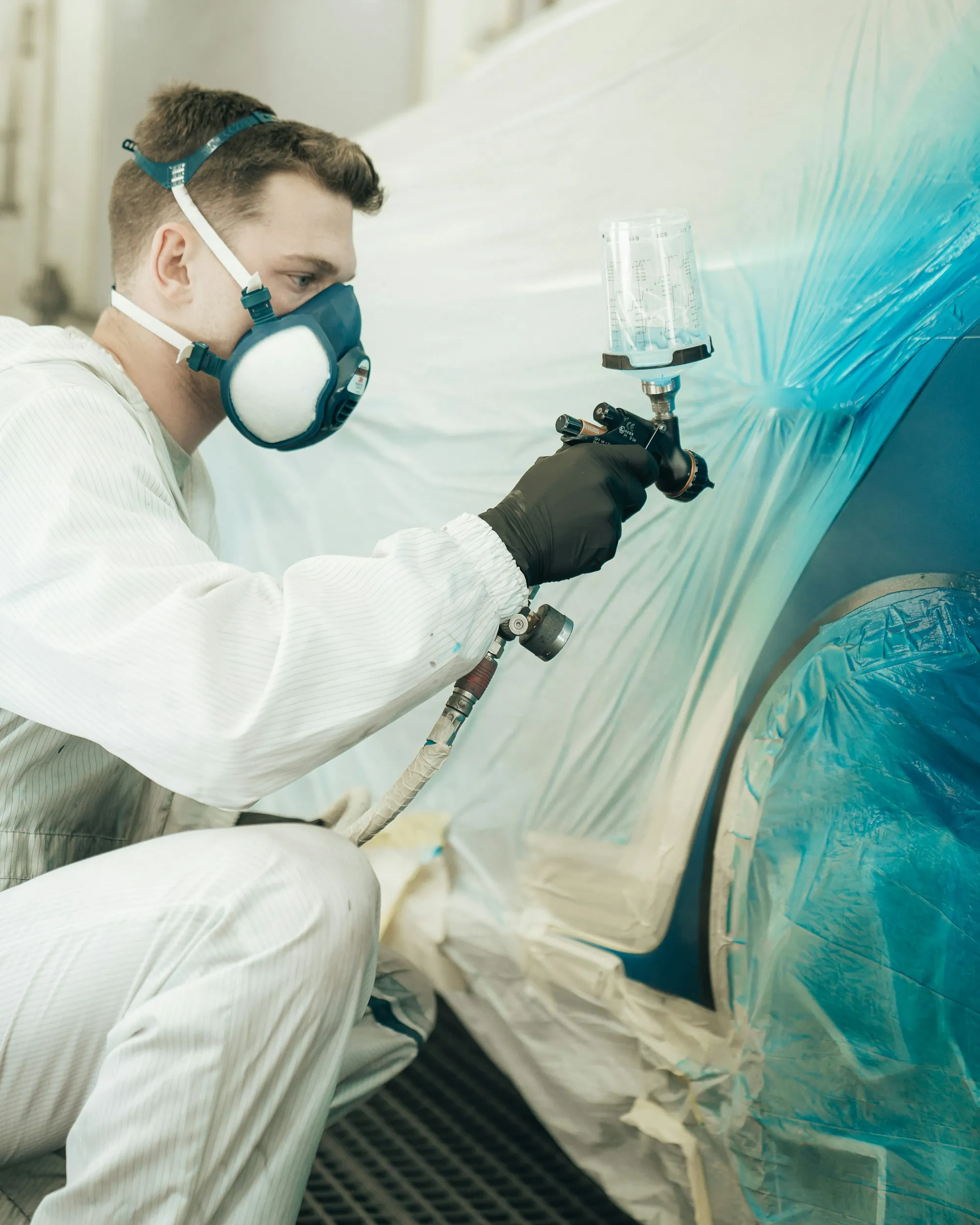
Booth paint work
Auto Painting & Refinishing in Lavon
Texas sun, gravel spray and repaired panels all end up needing paint. We match it, lay it down evenly and cure it so it's ready for the next summer.
(000) 000-0000 — talk through the paint jobPaint That Fits the Rest of the Vehicle
Paint is the part of a repair everyone notices, so it's the part we take slow. Most of our refinishing follows body work, but plenty comes from the road itself: a hood sandblasted by rock spray behind gravel trucks on FM 6, a roof faded by long summers, clear coat peeling off a tailgate. Every color starts with the code on the door jamb. Then a test card gets sprayed and held up to your vehicle outside, because the same code can vary from one vehicle to the next. The paint goes on in a clean booth and is cured before anything gets polished or reassembled. The aim is simple: a finish you'd never pick out as repaired.
What Our Refinish Work Includes
A good paint job is mostly preparation. Here's what happens before and after the color goes on.
Code lookup and spray-out cards
The formula comes from your paint code, but the shade is proven on a sprayed sample card set beside your actual vehicle before anything goes on the panel.
Rock-chip and pit repair
Hoods and front bumpers peppered by highway gravel are sanded down, filled where pitted and refinished so the front end looks even again.
Faded and peeling clear coat
When clear coat fails, the old layer gets sanded off completely so the new finish bonds to a sound base instead of flaking again.
Masking and trim removal
Handles, emblems and moldings come off where practical instead of being taped around, which leaves cleaner edges.
Sealed base for the color
Bare spots are primed and the area is sealed so the color lays down evenly and doesn't soak in unevenly.
Fading color into neighbors
New color is feathered out across the adjacent panel, so your eye never finds an edge between fresh and original paint.
Booth spraying and curing
Painting in an enclosed booth keeps dust and bugs off the finish, and curing hardens it before handling.
Cut and polish
Once hard, any dust specks are leveled with fine paper and the panel is buffed until its shine and texture line up with the original finish.
How a Refinish Goes
- 01
Prep the surface
The panel is cleaned, sanded and checked for low spots or old repairs underneath. Damaged areas get filled and primed. Everything that isn't being painted is masked or removed. This stage takes the most time, and it should.
- 02
Dial in color, then spray
We confirm the mixed color with a spray-out card against the actual vehicle. Base color goes on in even coats, followed by clear. Adjacent panels get blended where needed so the color flows across them. Then the booth cures the finish.
- 03
Polish and look in sunlight
After the cure, we level any specks and buff the surface. Trim and emblems go back on. We look at the panels outdoors from a few angles, since sunlight shows things shop lights miss. Then we call you to come look.
Why Our Paint Work Blends In
We check color in daylight
Shop lighting can hide a mismatch. Looking at the sample beside your vehicle outdoors catches it before it's on the panel.
Prep isn't rushed
Most paint failures start under the paint. Careful sanding, priming and sealing are what keep the finish from lifting.
Made for Texas sun
Summers out by the lake are hard on clear coat. We use a proper clear and cure it fully so it's ready for the heat.
Paint Looking Tired or Chipped?
Bring it by or describe it over the phone, and we'll give you an honest read on whether it's a spot job, a single panel or more. Drivers from Princeton and Farmersville bring us everything from chip-pitted hoods to complete refinishes.
Ask about paint for your vehicle — (000) 000-0000