Tow after a wreck
Accident Towing in Lavon From the Roadside to Our Shop
A car that hit a deer may still start, but a punctured radiator will cook the engine within a few miles. Sometimes the right move is to leave it parked and let a flatbed carry it.
Car off the road? Talk to us — (000) 000-0000When the Car Should Not Be Driven
After a wreck the first instinct is to see if the car will move. Out here, that often means a car limping along the gravel shoulder of SH 78 with coolant on the ground and a wheel pointed the wrong way. Driving it any distance can turn a body repair into an engine or suspension repair. If steam is coming from the grille, a tire is rubbing, warning lights are on or a lamp is hanging loose, it is safer to have it carried. We arrange a flatbed to bring the car straight to the shop, so a technician can look it over instead of anybody guessing. Get everyone clear of traffic first, and if the police are needed, call them before you call us.
What Goes Into an Accident Tow
A tow is the first step of the repair, and how it is done affects what we find later. Here is what that covers.
All four wheels off the ground
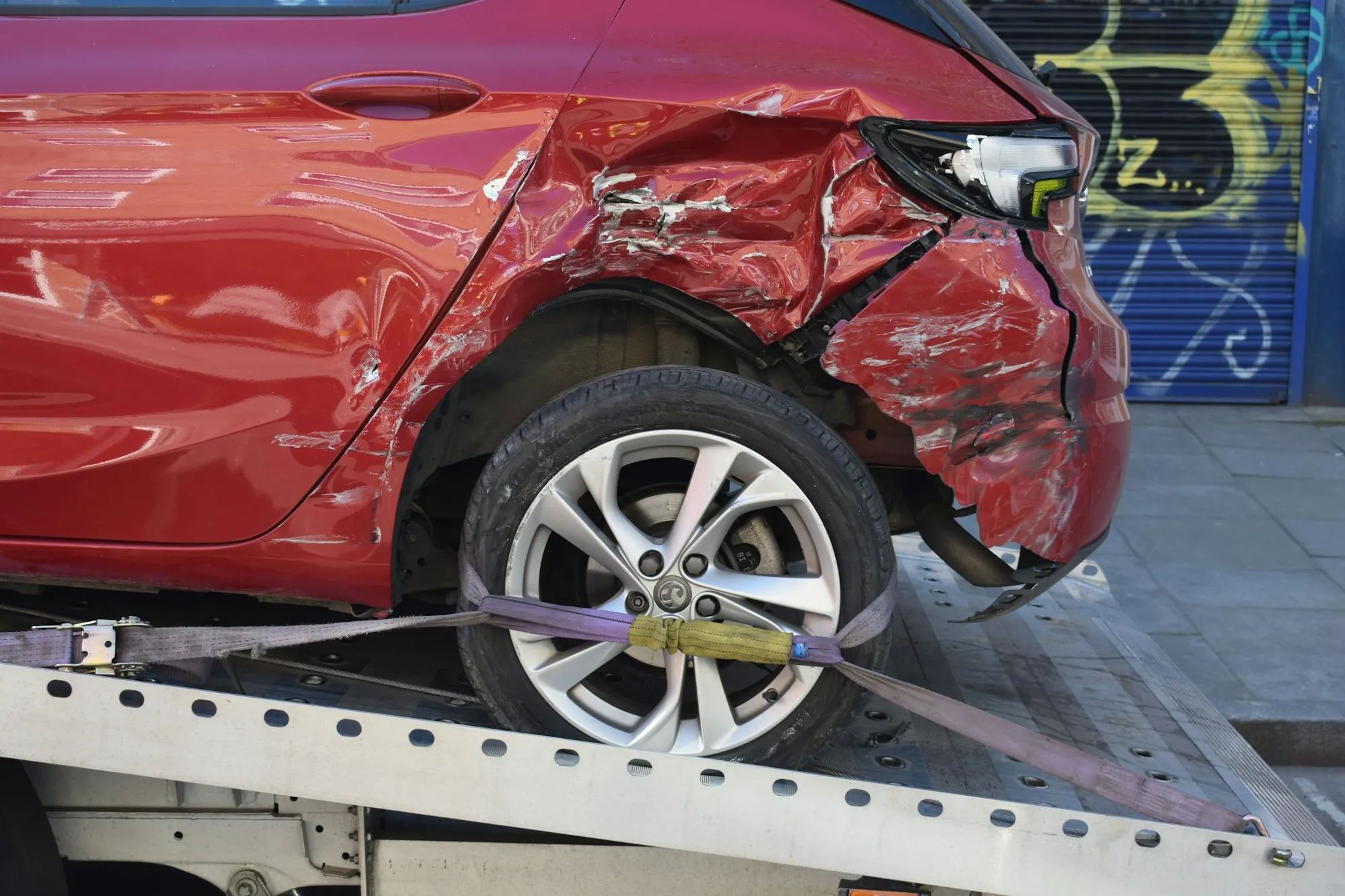
The car rides on the bed with every wheel lifted, so a bent wheel or broken axle is not dragged along.
Winching out of a bar ditch
Cars that slid off into a ditch or soft grass are winched up slowly so the underbody does not catch.
Hanging bumpers strapped down
Loose parts are secured or removed so they do not blow off on the way and become another driver's debris.
Leak notes at the scene
We note any leaks where the car sits, since a dripping radiator or a cracked condenser tells us where to look first.
Photos before loading
The car is photographed before it goes on the bed, which helps document the damage for the claim.
Trailers and hitched loads
When a towed trailer jackknifed or came loose, we help arrange for the trailer to be moved as well.
Registration and personal items
We remind you to take your papers, garage remote and personal things, or we bag them and keep them with the car.
Logged in at the shop
On arrival the car goes into a secured area and checked in with photos.
From the Shoulder to the Shop
- 01
Get safe, then call
Pull as far off the pavement as you can and turn on the flashers if they work. Once everyone is out of traffic and the police have what they need, call the shop. Tell us whether you are out by Copeville or in a lot near the causeway, and what the car is doing. We arrange a flatbed from there.
- 02
Load it with care
The tow operator looks the car over and photographs it before loading. Loose parts are strapped or removed. The car is winched onto the flatbed slowly and tied down at the wheels, not at the bent suspension. If a trailer is involved, we sort out how to move it too.
- 03
Arrive and start the inspection
The car is unloaded at our shop and checked in with photos. A technician looks it over, including under the hood, for leaks, cracked cooling parts and bent mounts. You get a call describing what turned up, along with help opening the claim. Nothing gets repaired until you and your insurer say so.
Why the Way It Is Towed Matters
No damage added on the trip
A car dragged on a wheel-lift with a broken control arm can come in worse than it left. A flatbed avoids that.
Clues stay intact
Leaks, scrapes and broken parts tell us what the impact reached. Hauling the car straight to us keeps that evidence in place for the estimate.
One less handoff
The car goes from the roadside to the shop that will fix it, instead of a storage lot first and another tow later.
Car Not Safe to Drive?
Get clear of traffic first and then give us a call. We will arrange the tow and take it from there.
Line up a flatbed — (000) 000-0000